Your team asks about an internal procedure and receives an answer linked to authorised documents. We design retrieval, permissions and evaluation to distinguish a grounded answer from a question that needs human escalation.
BLURTEK / SOLUTION STUDIOILLUSTRATIVE DEMO
EXPLORE A SCENARIO
Information in its place.
Example data
Example sources24demo
Evaluation tests08demo
Access levels03demo
What information can my team use to solve this task?
BLURTEK / ILLUSTRATIVE ANSWER
The assistant checks only sources permitted for this user. The answer includes references to review the original document; if evidence is missing, it asks for clarification or escalates to a person.
01 / Operations manualConversation mockup, not a connected chat.
RELATED CAPABILITY WITHIN THIS SERVICE
Local AI and GPU servers
Model, memory and workload sizing. Evaluate on-premises, private or hybrid deployment based on privacy, latency and operating cost.
FROM CONCEPT TO YOUR ENVIRONMENT
Designed to connect. Built around you.
Operations manual · Access policy · Current procedure
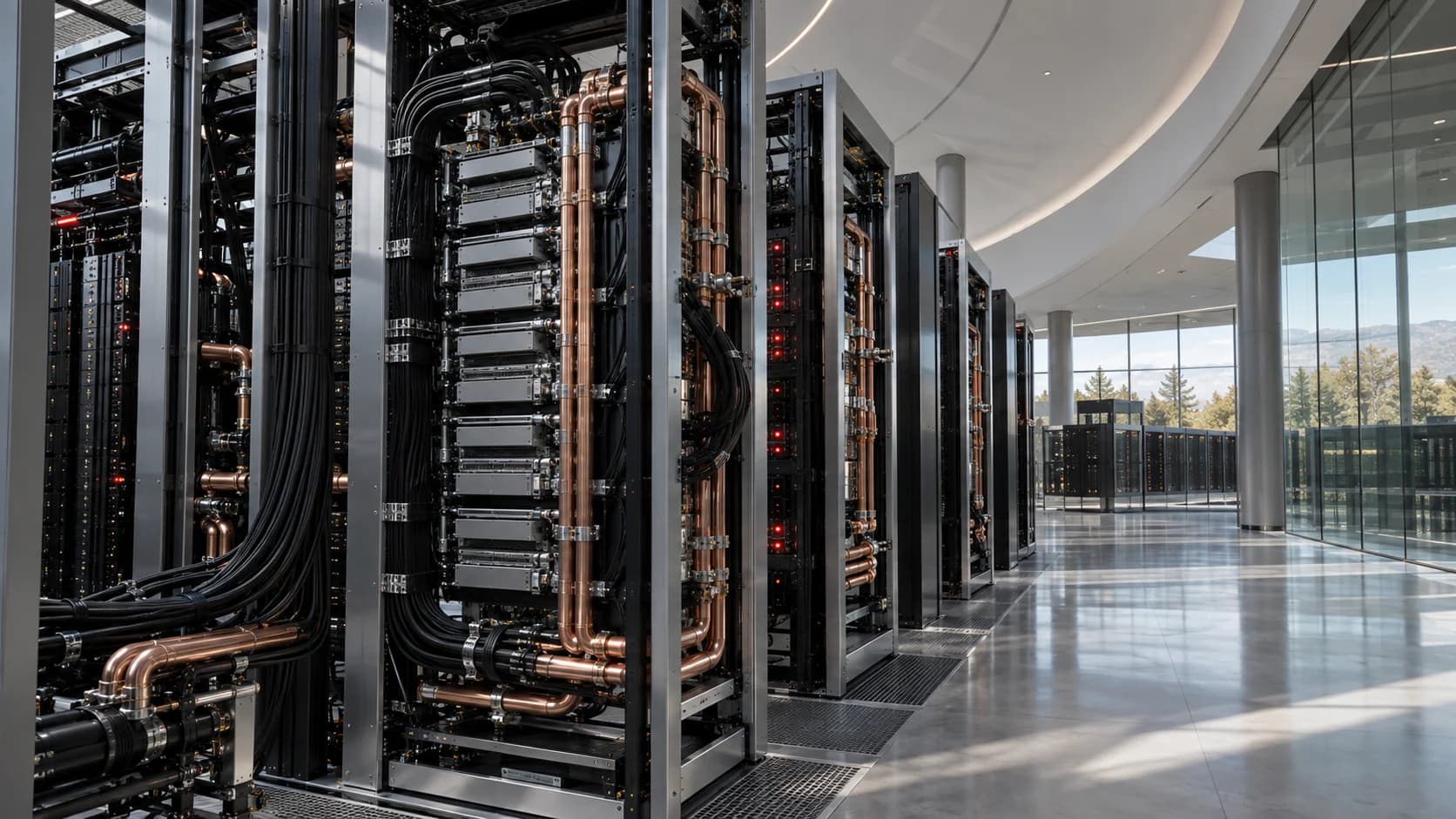
Conceptual image. Not a client installation.
HOW IT BECOMES A PROJECT
Clarity to decide. Evidence to move forward.
Choose an initial process and an outcome you can verify. The custom artificial intelligence proposal connects scope, implementation and operations; it is more than a list of technologies.
Scope you can review
We document the starting point, people and systems involved in operations manual. Requirements, exclusions and dependencies are made explicit before building.
Process and source map
Priorities and acceptance criteria
A verifiable first delivery
We validate a complete workflow in an agreed environment. We review the normal case and exceptions: insufficient permissions, missing data or integration failures.
Demonstration with your team
Recorded tests and corrections
A team that knows how to use it
Handover includes knowledge: how to operate, who can change what and who to contact. Maintenance, training and next phases are agreed so the solution does not become isolated.
Documentation and knowledge transfer
Ownership and continuity
Custom artificial intelligence
Let’s look at your use case.
Tell us what happens today, what needs to improve and which tools you use. We start by understanding it.
An assistant evaluated against your cases, connected to authorised sources and explicitly bounded in its actions.
WHAT WE NEED TO UNDERSTAND
Document sources, information classification, target tasks and examples of expected answers.
3 DELIVERY AREAS
AreaDeliverable to agree
01Data and knowledge
Source catalogue, permissions and retrieval index.
02Model and evaluation
Model selection and evaluation question set.
03Deployment and oversight
On-premises/private/hybrid architecture and tool permissions.
EXAMPLE JOURNEY
01Question about internal documentation
02Retrieval of permitted sources
03Answer with references or a notice of insufficient evidence
FAQ
Let’s be clear.
Does information have to leave the company?
Not necessarily. We can design an on-premises architecture; hardware, maintenance and external-source requirements are reviewed before committing to scope.
What do you need to prepare a proposal?
Goals, current systems, users involved and time or budget constraints. If access to sensitive information is needed, we agree conditions and permissions first.
How are price and timeline defined?
After defining scope, integrations, volume and acceptance criteria. The proposal separates implementation, licences or infrastructure and maintenance where applicable.
CAPABILITIES THAT CONNECT
WE START BY LISTENING
Your next step, thought through together.
Tell us what needs to improve. We help you decide where to start and what is worth building.